
What Is Dhul Hijjah? And How Do You Actually Teach It to Your Teenager?
Dhul Hijjah is one of the most spiritually significant seasons in the Islamic year — but many Muslim teenagers have never been properly taught what it means. Here's the context, the stories, and the practical ideas to change that, with a free writing workbook included.
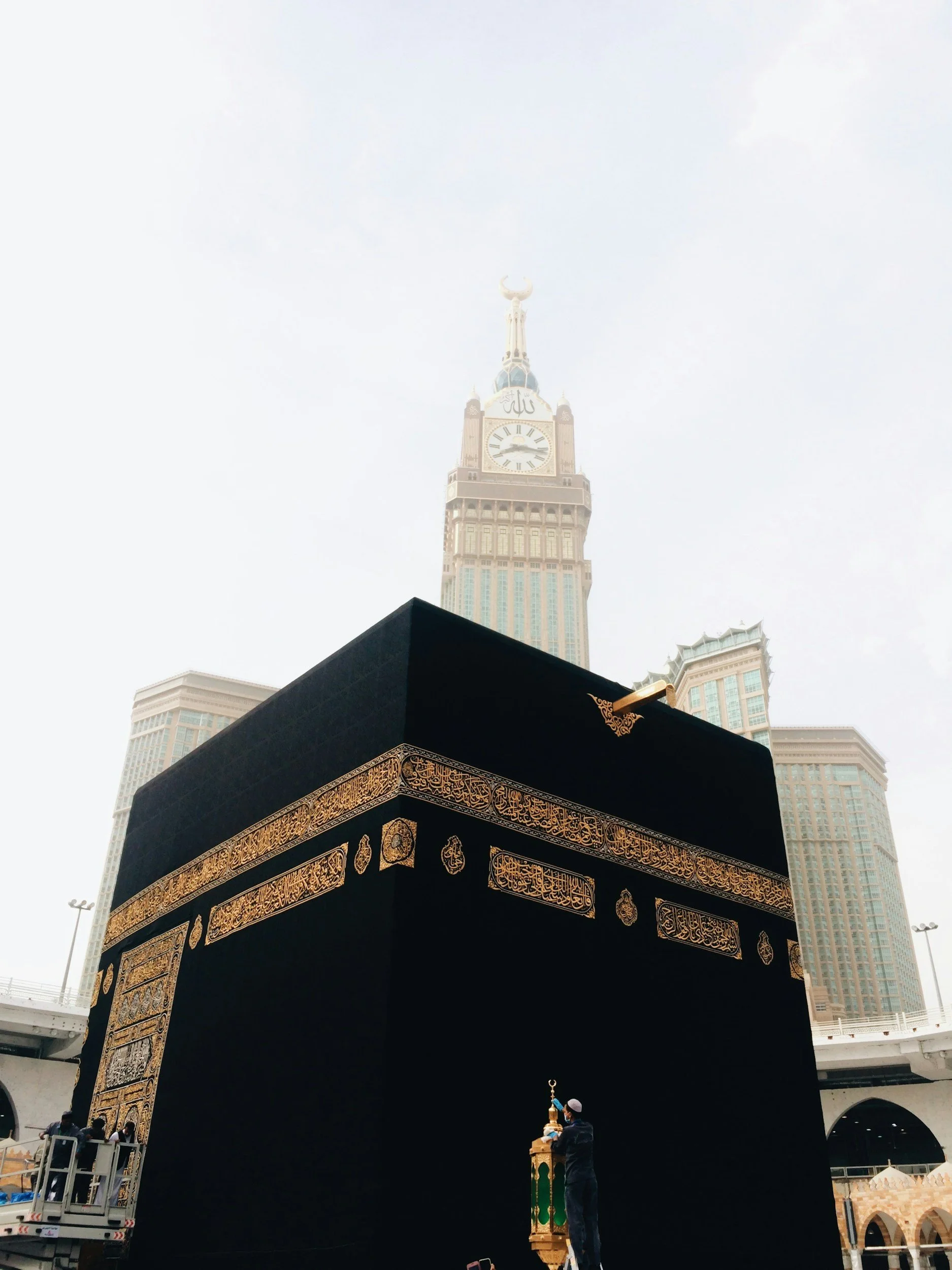
A guide for Muslim parents and educators, plus a free printable writing workbook
If you've ever tried to explain the significance of Dhul Hijjah to a teenager and been met with a blank stare, you're not alone. It can be hard to convey the weight of a sacred season to a generation scrolling through short-form content — especially when the rituals of Hajj feel remote to those who have never made the journey, and may not for years to come.
But here's what I've come to believe: teenagers don't need to stand on the plains of Arafah to feel Dhul Hijjah. They need the right invitation to meet it where they are. This post is about creating that invitation.
What Is Dhul Hijjah?
Dhul Hijjah is the twelfth and final month of the Islamic lunar calendar. Its name means "possessor of the pilgrimage," and it is the month in which Hajj — the fifth pillar of Islam — takes place.
But its significance goes far beyond the pilgrimage itself.
The Prophet Muhammad ﷺ said: "There are no days in which righteous deeds are more beloved to Allah than these ten days." (Bukhari). The companions asked whether even jihad in the path of Allah compared — and he said yes, except for the one who went out risking his life and wealth and did not return.
These are serious words. They tell us that the first ten days of Dhul Hijjah are among the most spiritually potent days of the entire year — for every Muslim, not just those performing Hajj.
Key Dates and Events
The first ten days are days of heightened worship. Muslims are encouraged to fast, increase their Dhikr (remembrance of Allah), give in charity, and perform good deeds of any kind. Fasting on the ninth day, the Day of Arafah, is particularly recommended for those not performing Hajj, and is said to expiate the sins of the previous and coming year.
The Day of Arafah (9th Dhul Hijjah) is considered one of the holiest days in the Islamic calendar. Pilgrims gather on the plains of Arafah in what is the spiritual climax of Hajj: a day of standing, supplication, and mercy. The Prophet ﷺ described the best of Dua as the Dua of Arafah.
Eid al-Adha (10th Dhul Hijjah) is the Festival of Sacrifice, commemorating the willingness of Ibrahim (peace be upon him) to sacrifice his son Ismail (peace be upon him) in obedience to Allah. A ram was provided in his place, and Muslims around the world mark this day with the Qurbani (sacrifice), prayer, and celebration.
The Stories at the Heart of It
What makes Dhul Hijjah particularly rich for education, especially for teenagers, is that it is built around some of the most emotionally powerful stories in the entire Islamic tradition.
Ibrahim (peace be upon him) was commanded in a dream to sacrifice his beloved son. He did not question. He told his son. His son consented. And as the blade was raised, a ram was provided. It is a story about the highest form of trust, and one that raises questions teenagers are more than capable of grappling with: What does real submission look like? What do you do when what Allah asks costs you everything?
Ismail (peace be upon him) said to his father: "Do what you are commanded. You will find me, if Allah wills, of the steadfast." (Surah As-Saffat, verse 102). He was a young man himself. That matters.
Hajar (May Allah be pleased with her) was left alone in a desert valley with her infant son and a skin of water. When the water ran out, she ran seven times between the hills of Safa and Marwah, not out of panic, but out of determined action rooted in trust. Water came. Zamzam still flows. Her run is embedded in the rituals of Hajj to this day.
These are living stories, woven into the rituals that millions of Muslims perform every year, and into the values that every Muslim is called to carry.
Why Teenagers in Particular Need This
There's a tendency, when teaching Islamic education to high schoolers, to lean heavily on information: dates, pillars, definitions, rulings. All of that has its place. But adolescence is a season of identity formation; teens are asking "who am I?", "what do I believe?", "does any of this actually mean something to me?"
Dhul Hijjah, taught well, speaks directly into those questions.
When a teenager reads about Hajar (may Allah be pleased with her) running between two hills and makes the connection to a moment in their own life when they felt lost and alone: that is education doing something information alone can't do. When they write a letter to Allah on behalf of a character standing on Arafah, and find that the words start to feel like their own: that is the kind of learning that stays.
Teenagers are also more capable of nuance than we sometimes give them credit for. They can sit with Ibrahim's (peace be upon him) impossible choice and explore the tension between love for a child and love for the Creator. They can think critically about how Hajj challenges modern values of comfort and individualism. They can write a persuasive essay or an honest Dua or a creative story, and in doing so, come to own their faith a little more.
How to Teach Dhul Hijjah to High Schoolers: Practical Approaches
Here are a few approaches that work particularly well for teens aged 14 and over.
Start with the stories, not the rulings
Before explaining what Hajj involves, let the stories of Ibrahim (peace be upon him), Ismail (peace be upon him), and Hajar (may Allah be pleased with her) breathe. Read them together, slowly. Ask open questions. Let your teen sit with the emotions before moving to the information.
Connect to their real life
Hajar's (may Allah be pleased with her) run between Safa and Marwah is about action plus trust. Ask: When have you felt like that? When have you run without knowing if help would come? The ritual comes alive when it stops being ancient history and becomes a mirror.
Use writing as a thinking tool
Writing is one of the most effective tools for deepening understanding, not because teens need to produce a perfect essay, but because the act of putting something into words forces clarity of thought. A short reflective journal entry, a creative story, a letter: these are not just literacy exercises; they are invitations to engage.
Tie it to the present
The first ten days of Dhul Hijjah aren't something that happened once in history. They are here, every year, available to every Muslim wherever they are. Help your teen identify one or two specific things they can do in these ten days, not a long list, but a real, achievable commitment. Intention matters.
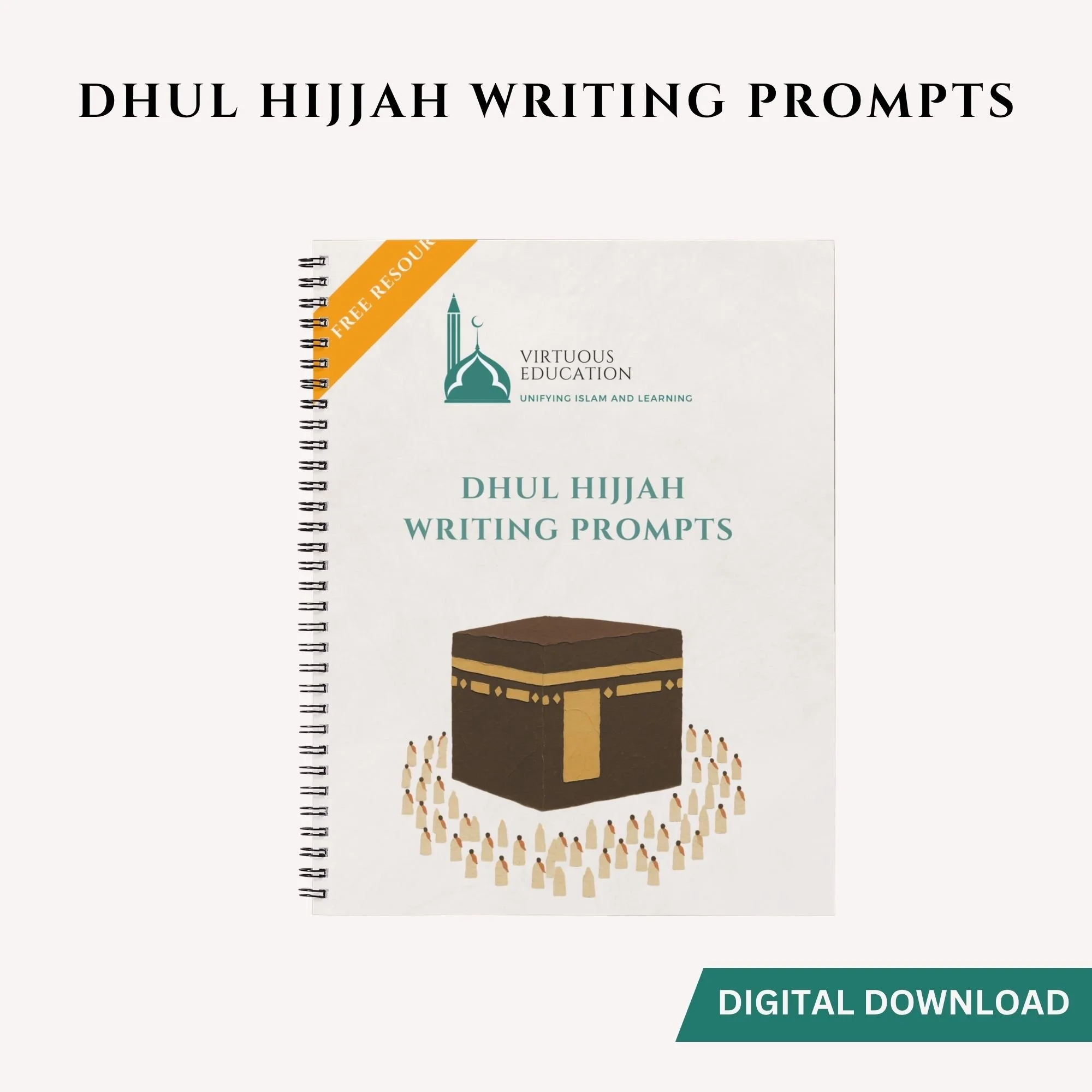
A Free Resource to Help: The Dhul Hijjah Writing Workbook
If you're looking for a structured, ready-to-use resource that brings all of this together, we have created a free printable writing workbook designed specifically for Muslim teens aged 12 and over.
It contains 8 writing prompts across four categories: reflective, creative, analytical, and spiritual, each with guiding questions, relevant Hadith, and lined writing space.
The Gift
Dhul Hijjah is a gift that comes around once a year. The first ten days, in particular, are days when the doors of worship are wide open and the good deeds are rewarded immensely.
For our teenagers, meeting that season with intention is a form of Tarbiyah that goes beyond any curriculum. It is about helping them discover, in the stories of Ibrahim and Hajar and Ismail, something of their own story. And about trusting that when they run, between whatever hills they're running between, the water will come.
May Allah accept from all of us in these blessed days. Ameen.