
Shakespeare is on the high school curriculum — but that doesn't mean Muslim students have to engage with it uncritically. Here's how to teach secular literature through an Islamic lens, with practical strategies for parents and teachers.
Why Shakespeare Belongs in the Muslim Classroom
As Muslim educators and parents, we often grapple with how to approach secular literature in our high school curriculum. On one hand, texts like Shakespeare’s plays are considered classics, enriching students' understanding of language, human nature, and history. On the other hand, we want to ensure our youth are grounded in Islamic values, not just absorbing ideas without critical thought.
So, how do we reconcile the two? The answer lies in integrated learning—teaching secular literature while framing it within an Islamic worldview.
Why Teach Shakespeare (and Other Secular Literature) in a Muslim School?
1. Developing Critical Thinking and Wisdom (الحكمة - Al-Hikmah)
Allah SWT says in the Qur’an:
“And whoever is given wisdom has certainly been given much good.” (Qur’an 2:269)
Shakespeare’s works explore universal themes—ambition (Macbeth), justice (The Merchant of Venice), love (Romeo and Juliet)—that Muslims can analyse through an Islamic lens. By engaging with these texts critically, students learn to extract wisdom while filtering out un-Islamic ideas.
2. Strengthening Language and Communication Skills
The Prophet ﷺ was known for his eloquence, and mastery of language is a valuable skill. Shakespeare’s plays enhance vocabulary, rhetorical techniques, and persuasive writing—skills that can be used in Da’wah and articulating Islamic ideas effectively.
3. Understanding Cultural Literacy Without Compromise
Muslims live in diverse societies, and being culturally literate helps in dialogue and Da’wah. Studying Shakespeare doesn’t mean accepting every theme blindly; rather, it’s about engaging with the world intelligently while holding firm to Aqeedah.
4. Building a Strong Muslim Identity Through Comparison
When students study Macbeth’s unchecked ambition, they can compare it to Islam’s warnings against Kubr (arrogance) and love of power. Romeo and Juliet’s impulsive love can be contrasted with the Islamic emphasis on modesty and patience in relationships. This strengthens their Muslim identity while appreciating literary artistry. Virtuous education (tarbiyyah fādilah) is an approach to teaching that prioritises the development of noble character (Akhlaq) alongside intellectual growth. It is rooted in the Quran and Sunnah, aiming to produce individuals who are God-conscious, compassionate, just, and beneficial to society.
"Indeed, Allah will not change the condition of a people until they change what is in themselves" (Surah Ar-Ra'd 13:11).
This verse underscores that true transformation begins with education that shapes the heart and mind.
How to Teach Shakespeare Islamically: Practical Tips
Start with Clear Intentions (النية - An-Niyyah)
Remind students that seeking knowledge—even secular—with the right intention (to gain wisdom, improve skills, or engage in Da’wah) is rewarded.
Pre-Reading Discussions on Islamic Perspectives
Before reading Othello, discuss jealousy (hasad) in Islam. Before Hamlet, explore Islamic views on justice and patience.
Critical Analysis Through an Islamic Lens
Ask questions like:
How does Macbeth’s downfall reflect the consequences of greed in Islam?
What would an Islamic resolution to the conflicts in "The Merchant of Venice" look like?
Alternative Islamic Texts for Comparison
Pair Shakespeare with Islamic literature, such as poetry from Rumi or Imam Ash-Shafi’i, to show how themes are handled differently.
Focus on Moral Lessons Over Plot Alone
Highlight the lessons in each text, not just the storyline.
Introducing Our Islamically-Integrated Shakespeare Units
At Virtuous Education, we understand the struggle of finding resources that balance academic excellence with Islamic integrity. That’s why we’ve developed:
Islamically-Integrated Shakespeare Units & Workbooks
Our units include:
✔ Thematic Islamic discussions woven into each act of the play
✔ Critical thinking questions comparing Shakespearean themes with Quran and Sunnah
✔ Student activities that reinforce Muslim identity while engaging with literature
✔ Teacher guides with Islamically-aligned lesson plans
Why Choose Our Resources?
✔ Authentic Islamic Perspective – Based on Ahlus Sunnah wal Jama’ah - Authentic Hadith and Quranic verses
✔ Curriculum-Aligned – Meets educational standards while enriching faith
✔ Engaging & Thought-Provoking – Helps students appreciate literature without compromising values
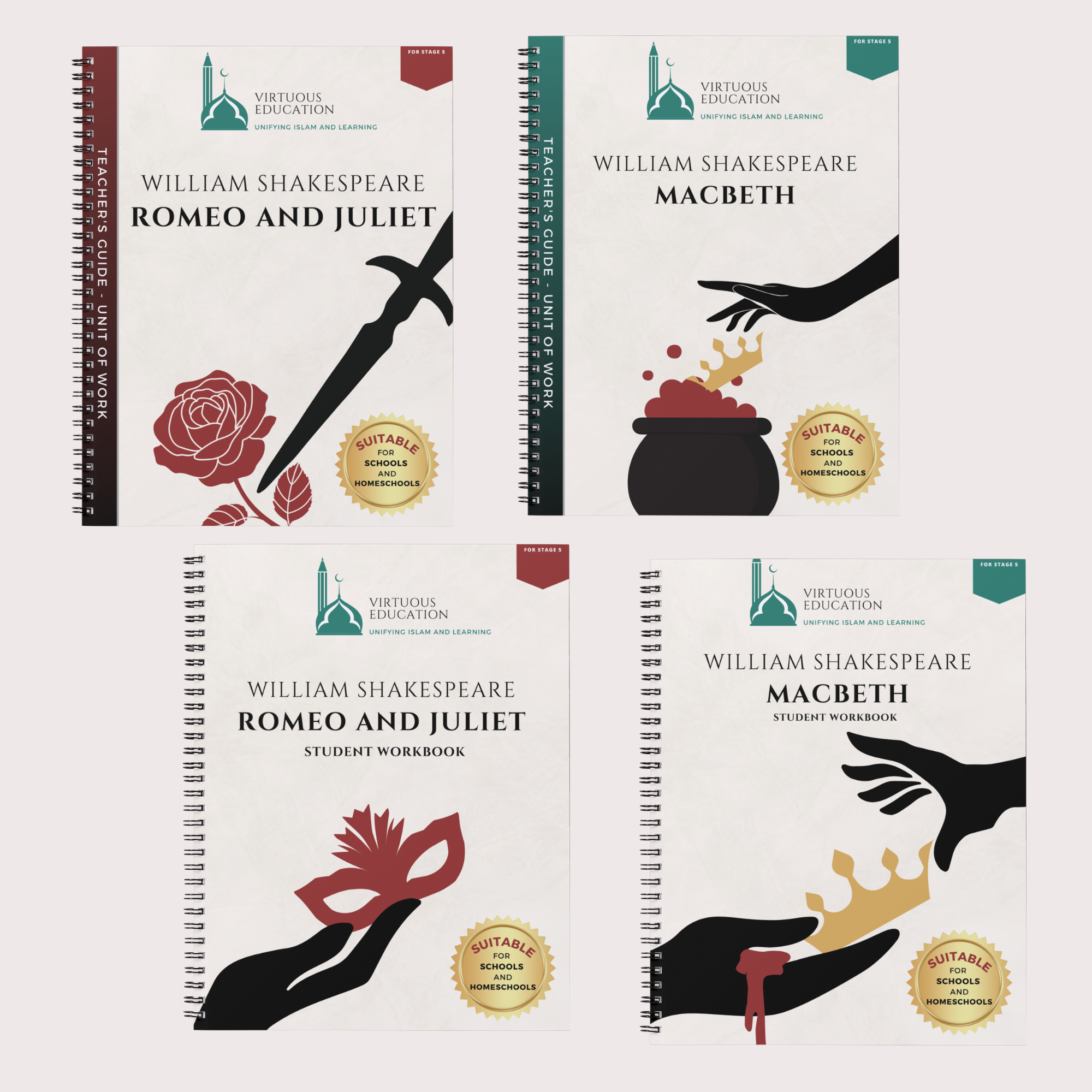
Teaching Shakespeare to Muslim Students is Fun and Easy!
Islam-integrated curriculum for ELA High School Students
All units and student workbooks were designed by qualified, experienced English Australian teachers. These topics have been taught numerous times in varying school contexts, so you can rest assure that the units are designed with evidence-based and experience-based effective teaching and learning strategies.
All lessons in the unit of work and student workbook include Quranic verses and authentic references to Hadith. Students are encouraged to explore each topic through the lens of Islam, allowing them to appreciate the beauty and relevance of Islam in their lives.
All units and student workbooks incorporate a range of cross-curricular opportunities and will satisfy learners of all varying abilities.
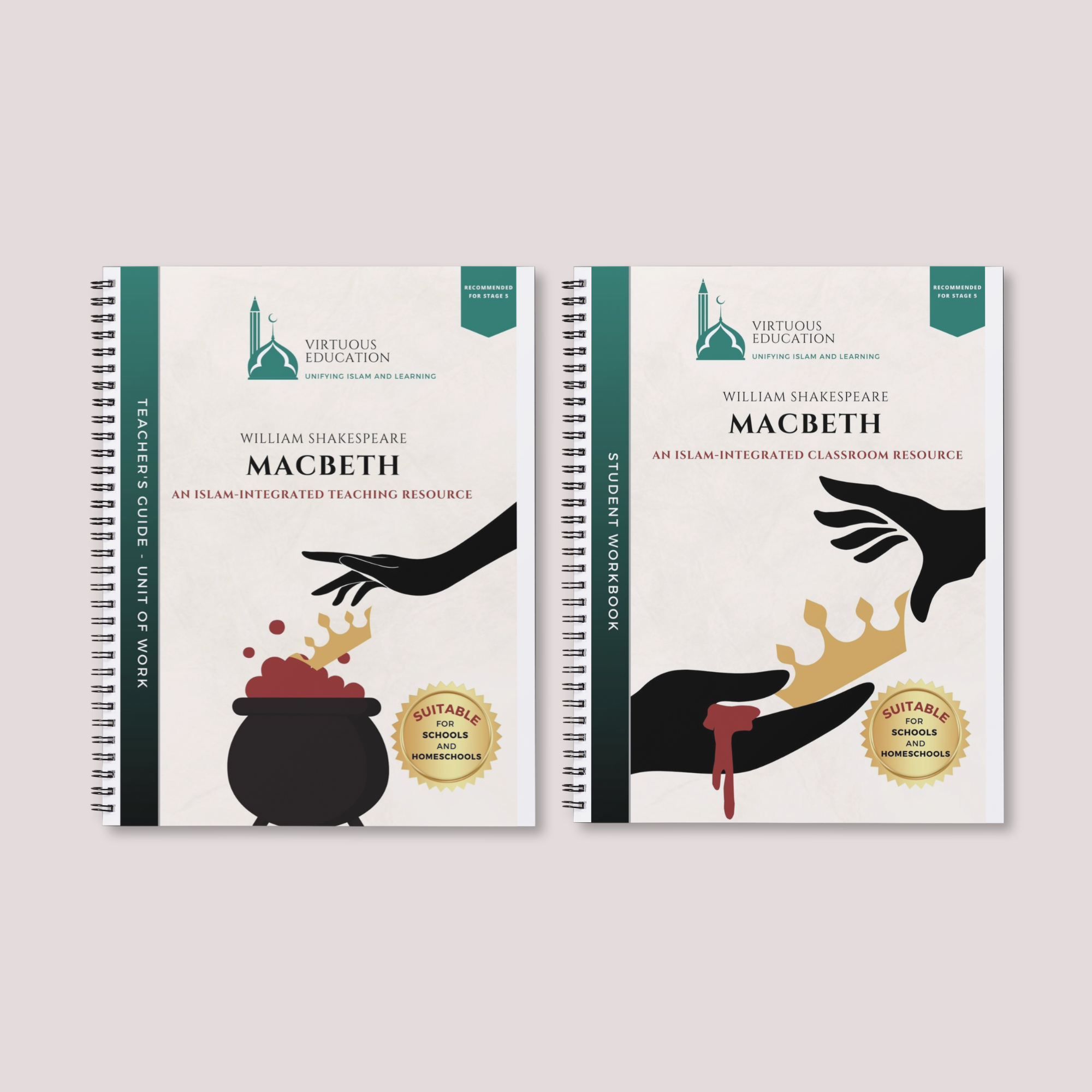
Suitable for Years 9–12 (NESA Stage 5–6)
Shakespeare's Macbeth explores ambition, deception, and the corruption of the soul, themes that find their deepest resonance in the Quran and Sunnah. This complete, NESA-aligned package equips Muslim high school students to engage with one of literature's most enduring texts through a framework that strengthens their faith rather than putting it aside.
Designed by a qualified Australian English teacher for Islamic school classrooms and homeschooling families. Fully planned and ready to deliver; no teaching background required.
What's Included
✅ Complete Unit of Work — Detailed lesson plans, structured teaching sequences, diverse text selections, and cross-curricular connections for the full unit.
✅ Student Workbook — An interactive workbook students use alongside each lesson, with analysis activities, Islamic reflection tasks, and written response scaffolds.
✅ Lesson Schedule and Assessment Tracker — A clear week-by-week planning roadmap.
✅ Two Assessment Options — Full rubrics and task descriptions for two differentiated assessment pathways.
✅ Islamic Pedagogy Framework — A guide for analysing any text through an Islamic critical lens, with templates and worked examples.
What Topics Are Covered
Dramatic structure, soliloquy, and Shakespeare's language
Ambition, power, and the Islamic concept of Niyyah (intention)
Deception, guilt, and the effect of sin on the nafs
Masculinity, moral courage, and Islamic character
Fate and divine will : Macbeth through the lens of Qadr
Analytical and creative writing to NESA standards
Who This Is For
Homeschooling parents teaching Years 9–12 English
Islamic school English teachers needing a complete, ready-to-use unit
Tutors or co-op leaders working through Shakespeare with Muslim students
Instant digital download. Print at home or view on any device.
Note: The unit of work and student workbook are designed to be used together.