Suitable for Years 7–10 (NESA Stage 4–5)
What does Islam say about our responsibility to the Earth? This complete English unit answers that question through literature, critical analysis, and the Quranic concept of Khalifah, the idea that every Muslim is a steward of creation.
Students analyse articles, poetry, and visual media while developing the analytical writing skills central to the NESA English syllabus. Contemporary environmental issues become a springboard for Islamic ethical reasoning, connecting what students learn in English to what they believe as Muslims.
What Topics Are Covered
My environment and cultural relationship with land
Leaving a legacy — Islamic perspectives on stewardship
Natural disasters, climate change, and our response
Indigenous connection to land
Successors upon the Earth (Surah Al-Baqarah)
The steps of Shaytan — recognising and resisting environmental apathy
Islamic history and the land
Academic writing
What's Included
✅ Complete Unit of Work — Structured lesson plans, diverse text selections, assessment rubrics, and cross-curricular connections. Examines environmental themes through both Muslim and non-Muslim perspectives.
✅ Student Workbook — Reflective prompts, Islamic relevance questions, creative tasks, and analytical activities. Designed for independent learner engagement.
✅ Lesson Schedule and Assessment Tracker — A week-by-week planning guide with clear student progress tracking.
✅ Art Appreciation Presentation — An optional PowerPoint resource to stimulate critical thinking through visual media — ready to present, no additional prep needed.
✅ Islamic Pedagogy Framework — A guide for analysing any text through an Islamic critical lens, with templates and worked examples.
Who This Is For
Homeschooling parents teaching Years 7–10 English
Islamic school teachers looking for a complete, low-prep, NESA-aligned unit
Educators wanting to connect environmental literacy with Islamic values
Instant digital download. Print at home or view on any device.
ISBN 978-1-7644286-6-8 | 978-1-7644286-7-5
Suitable for Years 7–10 (NESA Stage 4–5)
What does Islam say about our responsibility to the Earth? This complete English unit answers that question through literature, critical analysis, and the Quranic concept of Khalifah, the idea that every Muslim is a steward of creation.
Students analyse articles, poetry, and visual media while developing the analytical writing skills central to the NESA English syllabus. Contemporary environmental issues become a springboard for Islamic ethical reasoning, connecting what students learn in English to what they believe as Muslims.
What Topics Are Covered
My environment and cultural relationship with land
Leaving a legacy — Islamic perspectives on stewardship
Natural disasters, climate change, and our response
Indigenous connection to land
Successors upon the Earth (Surah Al-Baqarah)
The steps of Shaytan — recognising and resisting environmental apathy
Islamic history and the land
Academic writing
What's Included
✅ Complete Unit of Work — Structured lesson plans, diverse text selections, assessment rubrics, and cross-curricular connections. Examines environmental themes through both Muslim and non-Muslim perspectives.
✅ Student Workbook — Reflective prompts, Islamic relevance questions, creative tasks, and analytical activities. Designed for independent learner engagement.
✅ Lesson Schedule and Assessment Tracker — A week-by-week planning guide with clear student progress tracking.
✅ Art Appreciation Presentation — An optional PowerPoint resource to stimulate critical thinking through visual media — ready to present, no additional prep needed.
✅ Islamic Pedagogy Framework — A guide for analysing any text through an Islamic critical lens, with templates and worked examples.
Who This Is For
Homeschooling parents teaching Years 7–10 English
Islamic school teachers looking for a complete, low-prep, NESA-aligned unit
Educators wanting to connect environmental literacy with Islamic values
Instant digital download. Print at home or view on any device.
ISBN 978-1-7644286-6-8 | 978-1-7644286-7-5

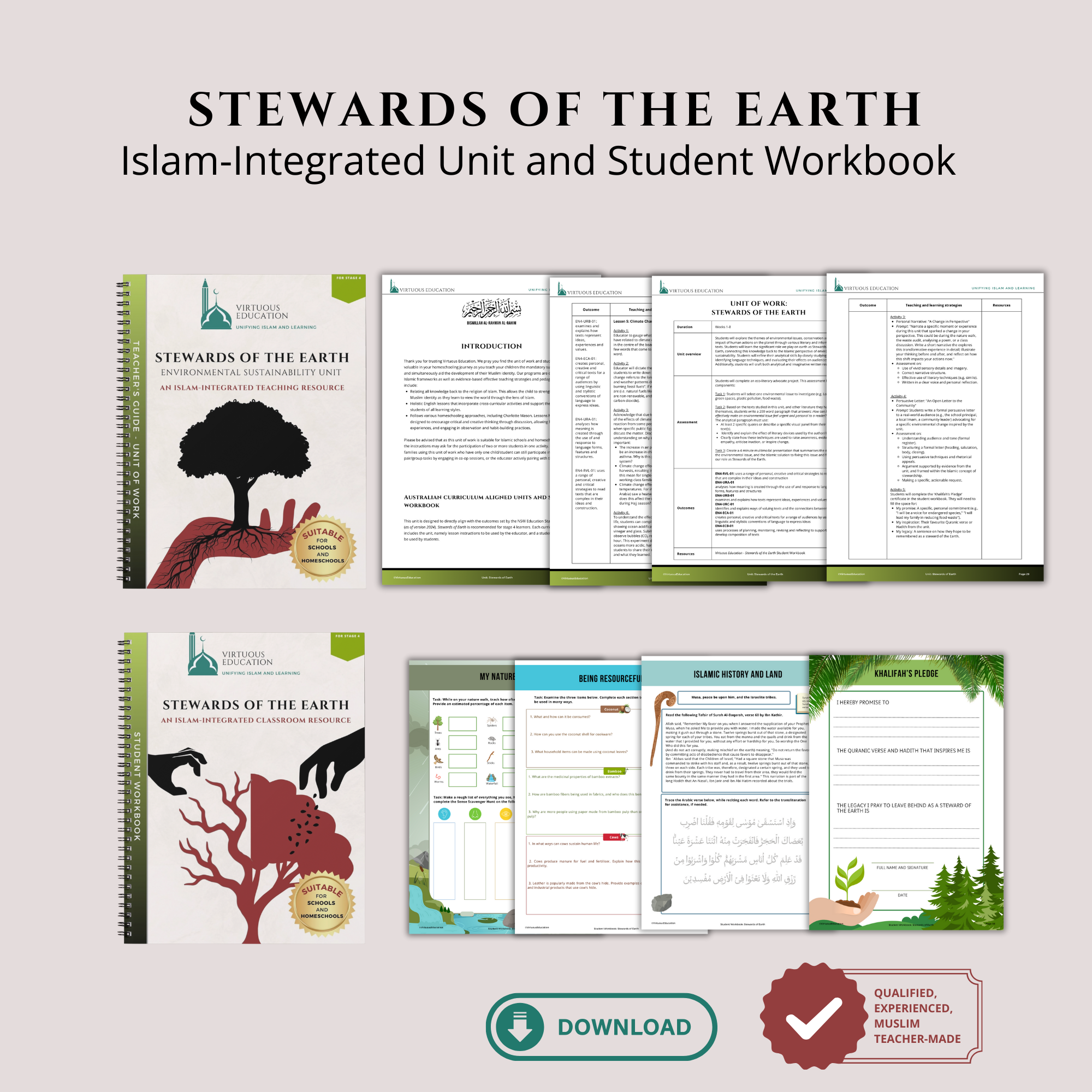 Image 1 of 8
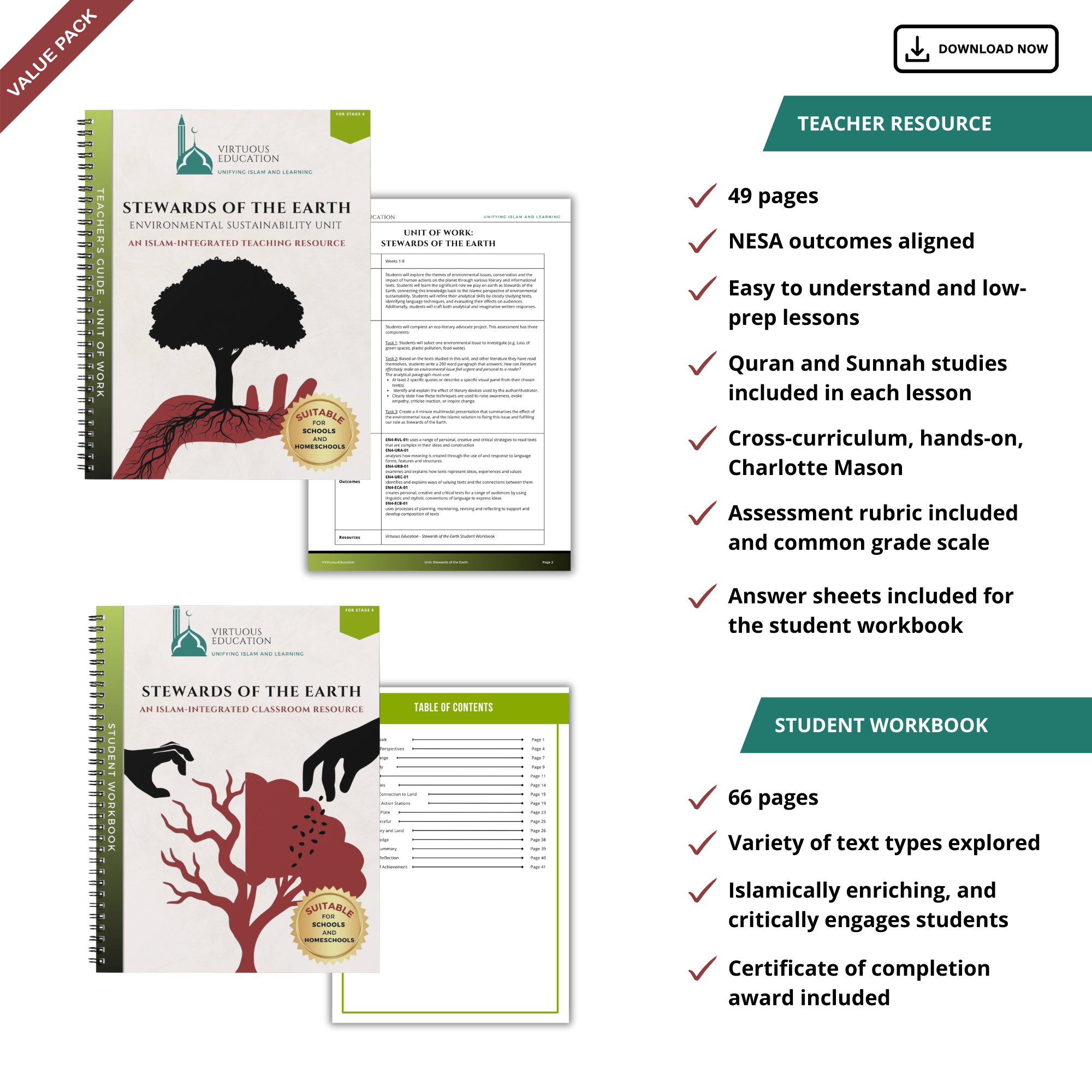 Image 2 of 8
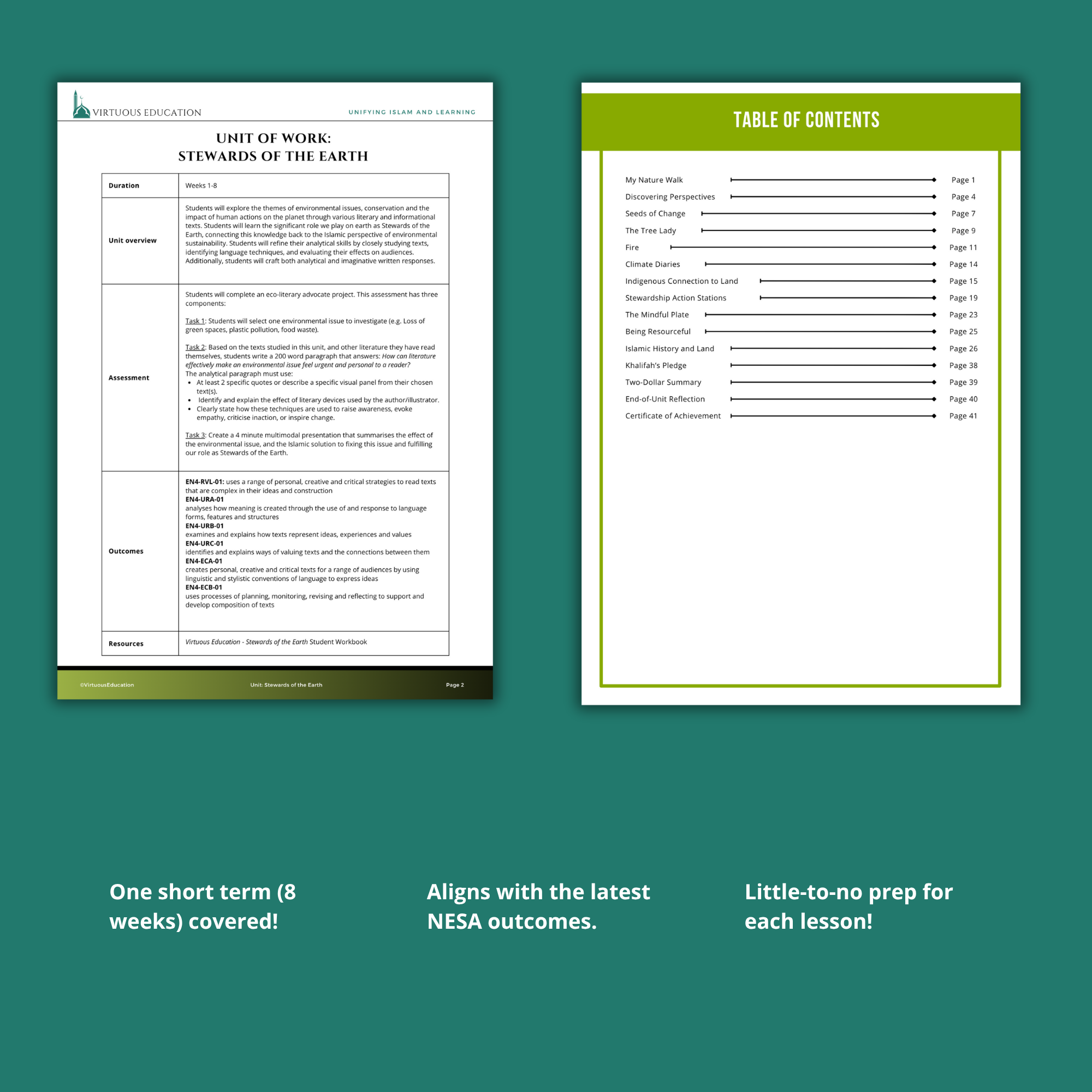 Image 3 of 8
 Image 4 of 8
 Image 5 of 8
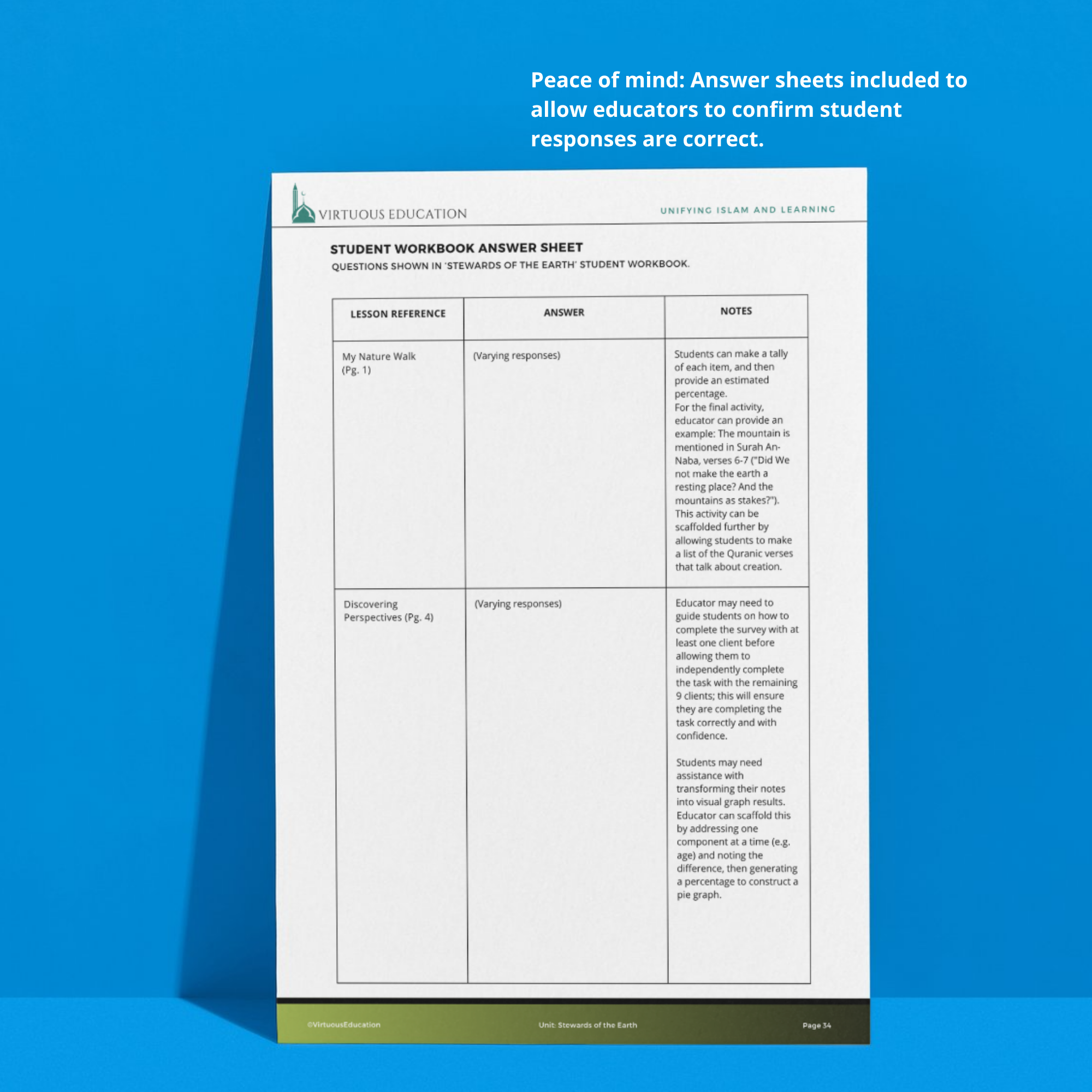 Image 6 of 8
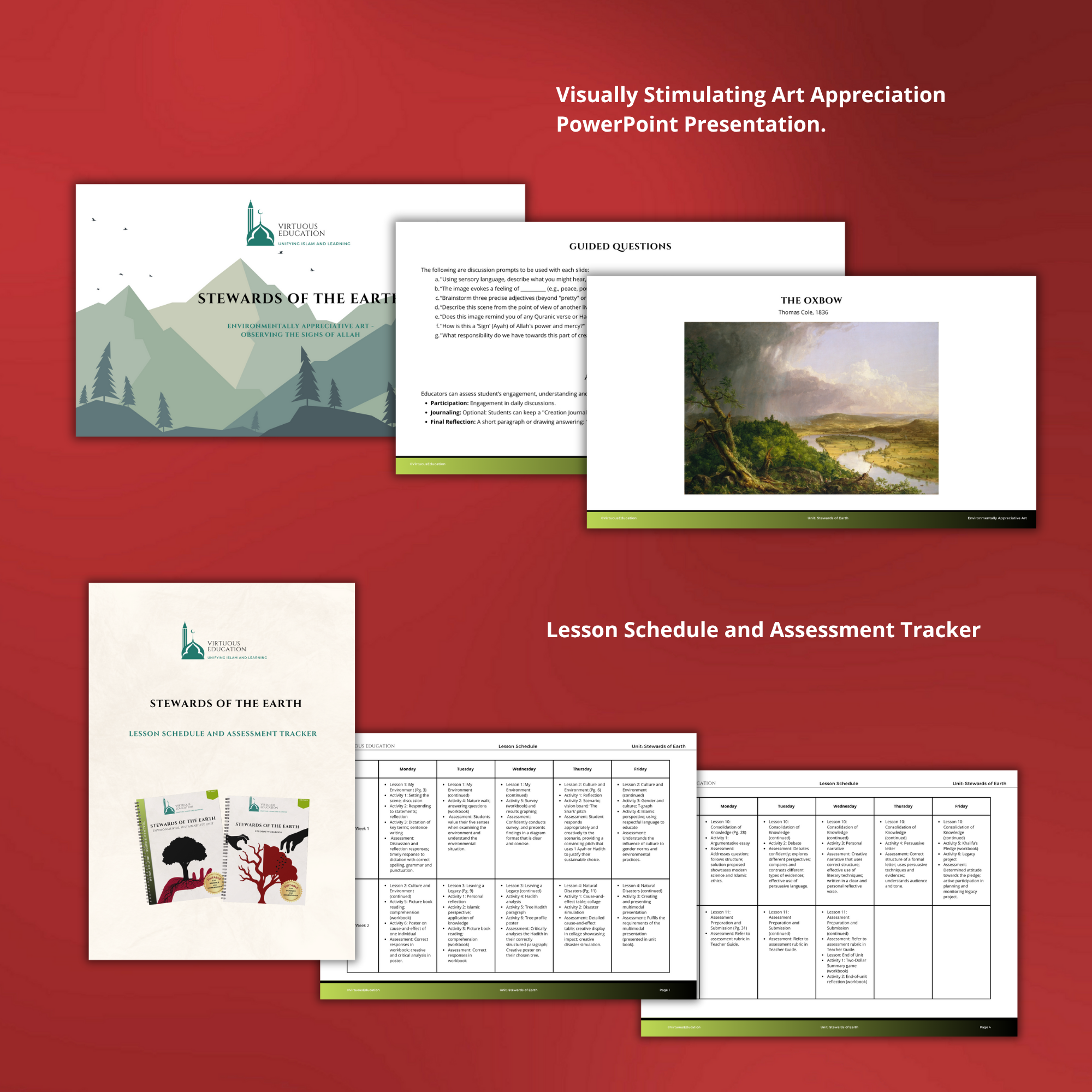 Image 7 of 8
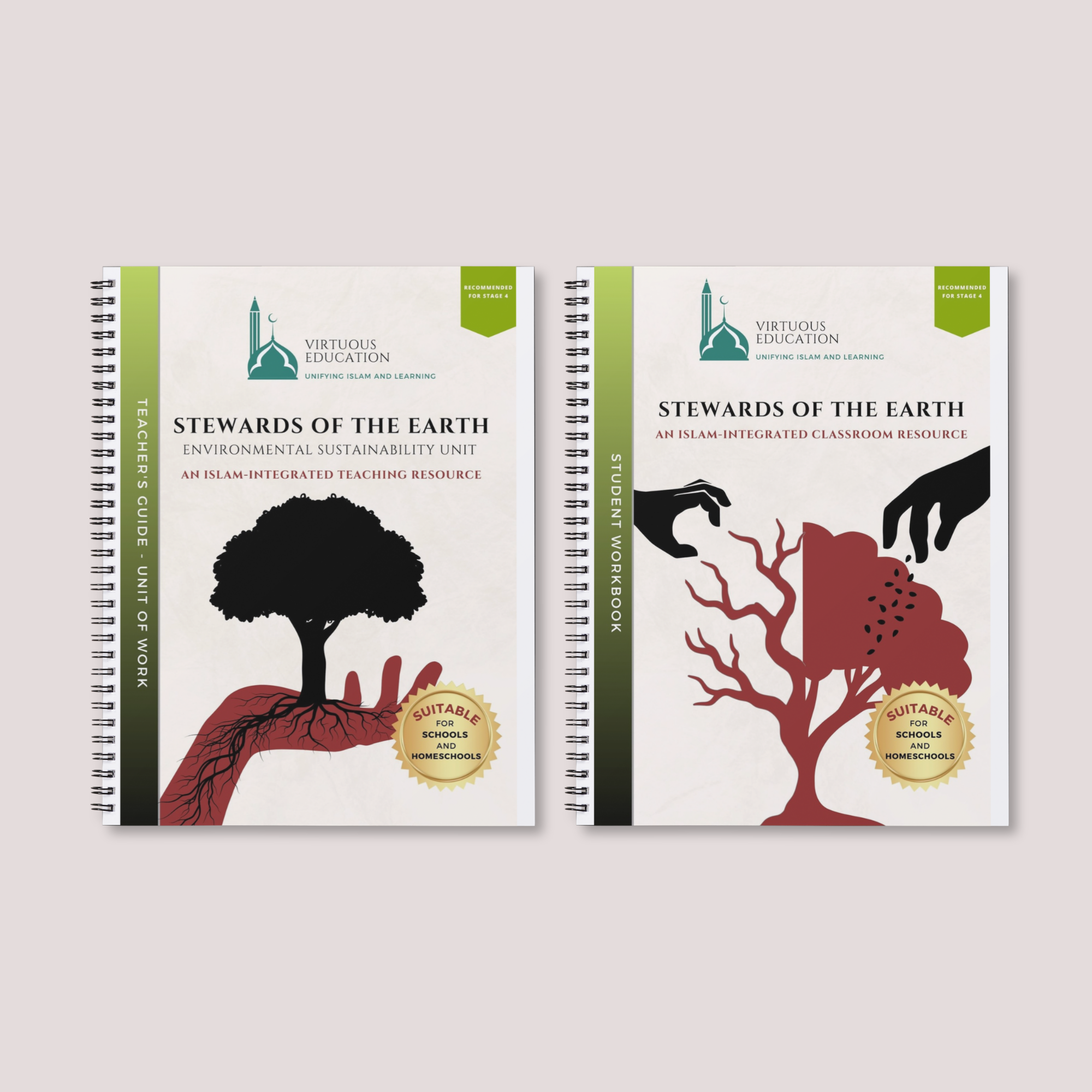 Image 8 of 8