
The Gap Most Parents Notice Eventually
Muslim teenagers deserve learning materials that speak to their whole identity: academically rigorous and Islamically grounded. Here are the resources worth knowing about.
Recommended Educational Materials That Combine Academic Subjects With Islamic Principles for Teenagers
Your teenager is smart, curious, and genuinely committed to their faith. They're sitting through English classes, writing essays, preparing speeches, and studying critical thinking, and almost none of it acknowledges the Islamic intellectual tradition that has shaped scholarship for over a thousand years.
Meanwhile, their Islamic studies feel disconnected from the academic world they inhabit five days a week. Two separate tracks. Two separate identities. Neither informing the other.
This is the gap that integrated educational materials are designed to close, and the options available to Australian Muslim families are genuinely growing. Here's a guide to what's out there and how to choose well.
What Makes a Resource "Integrated" Rather Than Just "Islamic"
There's an important distinction worth making at the start. A resource that teaches Quranic Arabic, Fiqh, or Islamic history is a religious education resource. Valuable, absolutely; but not the same as an integrated resource.
An integrated educational material is one that takes an academic subject (writing, critical thinking, public speaking, science, history) and teaches it in a way that is informed by Islamic values, grounded in Islamic scholarship, and relevant to a Muslim student's lived experience.
The best integrated resources don't compartmentalise. They show students that the Islamic intellectual tradition and rigorous academic thinking are not in tension; rather, they're deeply compatible.
What to Prioritise When Choosing
With any integrated resource, these are the questions worth asking:
Is the Islamic content accurate and substantive? Surface-level mentions of Islam that don't engage meaningfully with Islamic scholarship are not truly integrated resources. Look for resources that cite Quran and Hadith purposefully and that are written by or in close consultation with people who understand Islam.
Does it challenge the student academically? A resource pitched too low will disengage a teenager quickly. Look for content that assumes intelligence and builds real skill.
Does it produce something tangible? The best educational materials leave students with completed work they're proud of, including an essay, a speech, a project. Output is evidence of learning.
Is it designed for the Australian context? Resources designed for the UK, US, or Middle East markets often require significant adaptation. Resources designed for Australian students, using Australian English, referencing the Australian curriculum, and acknowledging the Australian Muslim experience, are ready to use.
Recommended English Materials for Years 7 to 12
English is where the Islamic tradition of eloquence, storytelling, and careful reasoning intersects most naturally with the school curriculum. The resources below span reading, writing, textual analysis, creative writing, and persuasion; and all of them integrate Islamic principles in a way that feels purposeful rather than tacked on.
For Students Learning to Analyse Texts (Years 7 to 10)
One of the most underrated entry points into integrated English learning is using Quranic narratives as the text itself. The Stories in the Quran series offers short, affordable workbooks built around individual Quranic stories: Prophet Yusuf, Maryam, Musa, Ibrahim, Nuh, and the People of the Cave among them. Each workbook uses the story as a literary text, teaching students to read closely, respond in writing, and think about character, theme, and purpose. These work well as standalone lessons, as enrichment during Ramadan, or as a gentle introduction to structured English responses for younger or less confident students. At $3.50 each, they're also an easy way to build a small classroom or home library without a significant investment.
For Stage 4 and 5 students ready for something more substantial, the 99 Names and Attributes of Allah — English Integration Workbook takes a different approach. It uses the Asma ul-Husna as a vehicle for developing vocabulary, writing style, and reflective expression; skills that feed directly into the kind of personal and creative writing tasks Australian students encounter from Year 7 onwards.
For Students Studying Shakespeare or Literature Units (Years 9 to 12)
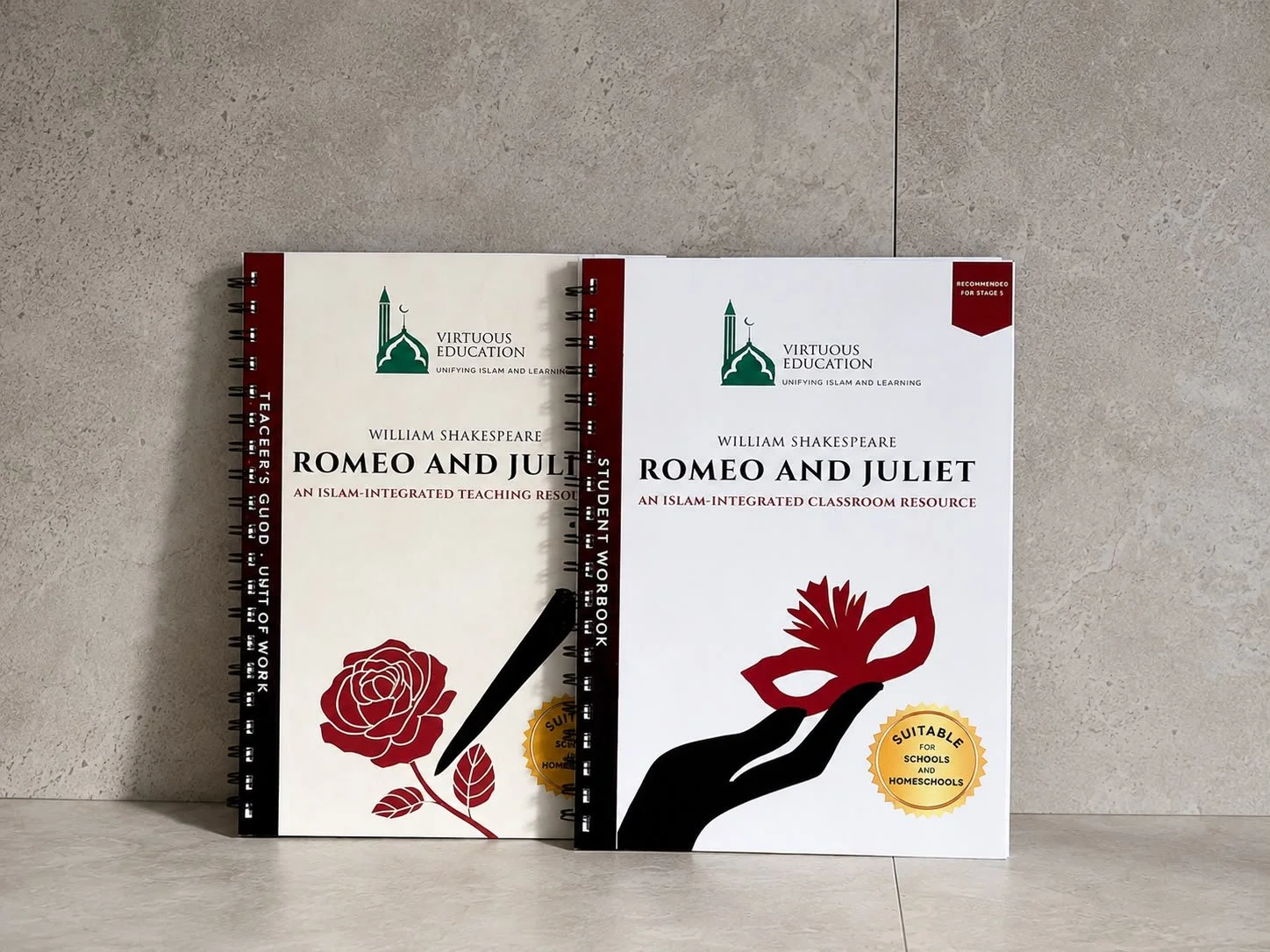
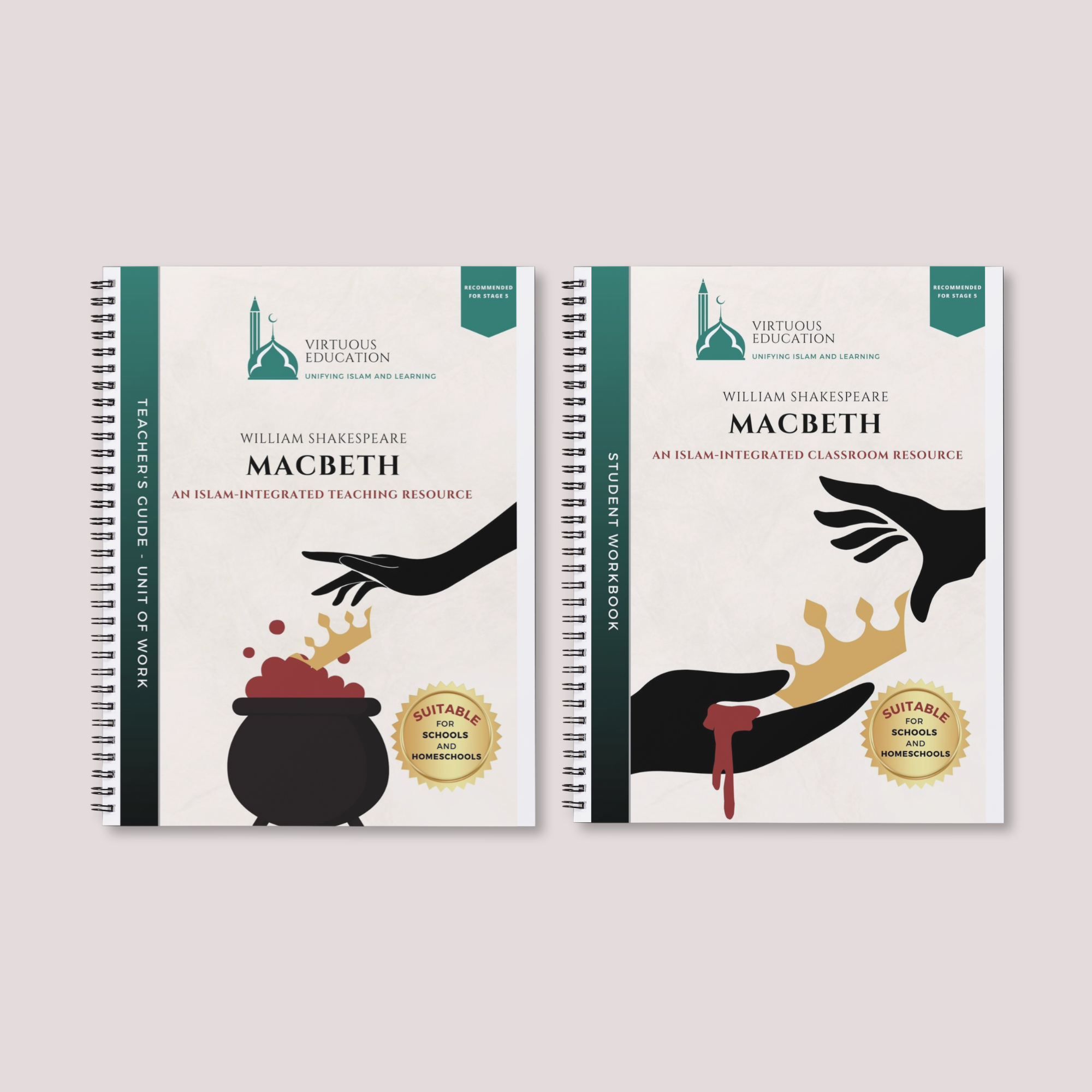
Here's something Muslim students rarely get: a Shakespeare unit that actually connects to their worldview. The Islam-integrated units for Romeo and Juliet and Macbeth are full teacher and student workbooks designed to guide students through close textual analysis of these plays while drawing genuine, substantive connections to Islamic ethics, values, and scholarship.
These aren't superficial comparisons. The units engage seriously with themes of honour, ambition, justice, and consequence; and ask students to think Islamically about the choices characters make and the worlds Shakespeare constructs. Both units are NESA-aligned and suitable especially for Years 9 to 10, making them directly useful for formal assessment preparation.
For Students Working on Identity and Personal Writing (Years 7 to 10)
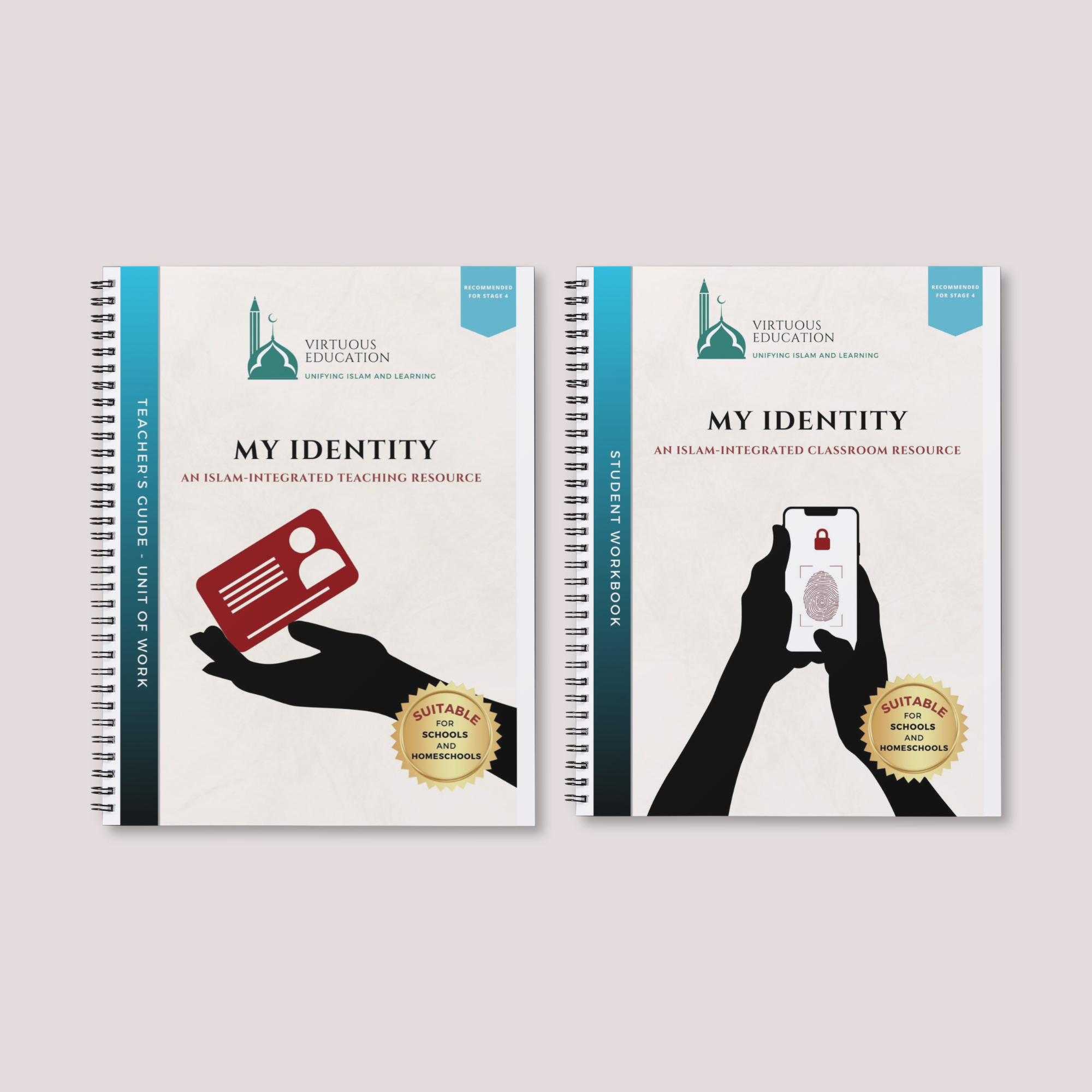
The My Identity — Islam-Integrated Unit of Work addresses something uniquely important for Muslim teenagers in Australian schools: the experience of navigating multiple identities in a society that doesn't always make space for theirs. This unit builds reading and writing skills through the lens of identity, belonging, and what it means to be a young Muslim in Australia. It is the kind of resource that gives students both the language to articulate who they are and the analytical skills to engage with how identity is constructed in texts they study.
For Students Building Creative Writing Skills (Years 7 to 12)
A Muslim Storyteller's Guide is a step-by-step creative writing workbook that teaches narrative craft: plot, character, voice, tension, resolution, all through an Islamic storytelling tradition. Students don't just learn to write stories; they learn to write stories with purpose, grounded in Islamic values around truth, empathy, and meaningful narrative. This is a genuinely useful resource for any student who struggles with creative writing tasks, particularly those who find generic story prompts disconnected from their experience and values.
For Students Developing Persuasive Writing and Rhetoric (Years 9 to 12)
Students at the senior end of high school are expected to argue, persuade, and analyse at a sophisticated level. The Articulate Muslim workbook addresses this directly, covering essay structure, rhetorical techniques, speech writing, and the ethics of argumentation, all within an Islamic framework. It's a comprehensive resource that includes a full answer guide, making it practical for both classroom and homeschool settings.
A free five-lesson Starter Guide is available as a no-cost introduction to the approach. Download it here →
For Ramadan and Enrichment Periods
The Ramadan Activity Workbook for Muslim Teens sits slightly outside the standard English curriculum but deserves a mention for families looking for structured, meaningful learning during Ramadan. It includes daily lessons, projects, and challenges that develop reflection, writing, and creative thinking; skills that carry directly back into the classroom after the break.
The materials that combine academic subjects with Islamic principles for teenagers are growing in quality and availabilit, but they still require some searching. The most important principle to hold onto is this: genuine integration means Islam is the framework, not the decoration.
When your teenager learns to write an essay through the lens of Niyyah, Hikmah, and Sidq, they're not just becoming a better writer. They're developing an Islamic identity that can engage confidently with the academic world. That's the goal. And there are resources, finally, that are built to take them there.
Suitable for Years 7–10 (NESA Stage 4–5)
What does Islam say about our responsibility to the Earth? This complete English unit answers that question through literature, critical analysis, and the Quranic concept of Khalifah, the idea that every Muslim is a steward of creation.
Students analyse articles, poetry, and visual media while developing the analytical writing skills central to the NESA English syllabus. Contemporary environmental issues become a springboard for Islamic ethical reasoning, connecting what students learn in English to what they believe as Muslims.
What Topics Are Covered
My environment and cultural relationship with land
Leaving a legacy — Islamic perspectives on stewardship
Natural disasters, climate change, and our response
Indigenous connection to land
Successors upon the Earth (Surah Al-Baqarah)
The steps of Shaytan — recognising and resisting environmental apathy
Islamic history and the land
Academic writing
What's Included
✅ Complete Unit of Work — Structured lesson plans, diverse text selections, assessment rubrics, and cross-curricular connections. Examines environmental themes through both Muslim and non-Muslim perspectives.
✅ Student Workbook — Reflective prompts, Islamic relevance questions, creative tasks, and analytical activities. Designed for independent learner engagement.
✅ Lesson Schedule and Assessment Tracker — A week-by-week planning guide with clear student progress tracking.
✅ Art Appreciation Presentation — An optional PowerPoint resource to stimulate critical thinking through visual media — ready to present, no additional prep needed.
✅ Islamic Pedagogy Framework — A guide for analysing any text through an Islamic critical lens, with templates and worked examples.
Who This Is For
Homeschooling parents teaching Years 7–10 English
Islamic school teachers looking for a complete, low-prep, NESA-aligned unit
Educators wanting to connect environmental literacy with Islamic values
Instant digital download. Print at home or view on any device.
ISBN 978-1-7644286-6-8 | 978-1-7644286-7-5